
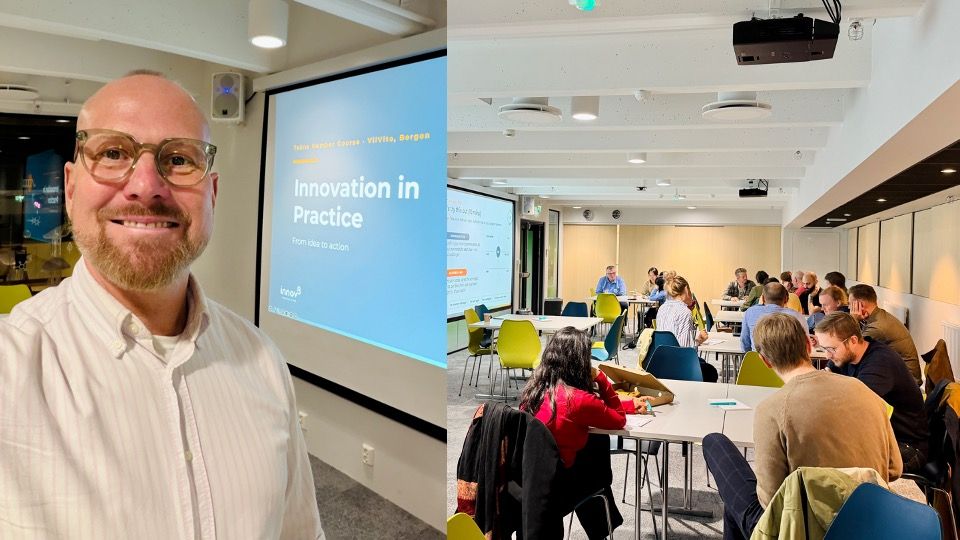
I recently ran a workshop on innovation in practice for Tekna's member school at VilVite Bergen Science Centre. Together we explored why it matters so much to understand the target group's needs, how to develop and prioritise ideas, and, not least, how to challenge your own assumptions about solutions.
From scepticism to engagement
Some participants seemed a little sceptical at first. Empathy isn't usually the first word that comes to mind in an engineering context.
That changed when we set out to redesign a dishwasher using gamification, especially for an unmotivated teenager. The room came alive, and empathy suddenly became an important instrument in the engineer's toolbox.
So, do engineers like working with empathy? Yes, as long as it makes sense.
Why empathy creates value
One of the most important lessons of my career is this: developing a solution without focusing on the target group's needs creates no value.
That work starts with empathy. A simple tool I often use is the empathy map, which helps a team step into the user's shoes by looking at what they say, think, do and feel.
One dishwasher, many users
Far too many of the products we use every day forget that there are different target groups with different needs. Take a dishwasher with 14 buttons and lights. A Tekna engineer might love having that many options, while an older person with poor eyesight may experience it very differently.
The same applies to services, processes and internal tools. When we design for ourselves, we often miss the people we're actually designing for.
My own turning point
My journey towards understanding user needs began at SAP in 2012, when Design Thinking was rolled out to all employees and I was an early adopter. It became a turning point: from falling in love with my own ideas to exploring the problem together with others.
To this day, it's the starting point for everything I do, from projects to courses to coaching.
Over to you
How do you bring your customers' needs into your everyday work? And what in your organisation is holding you back from reaching solutions that meet different needs?
If your team is experiencing too much discussion and too little progress, I'm happy to have a chat.


